Reader story
The 'Invoice' Email That Almost Cost Me My Bank Login
A reader describes how a fake invoice attachment led to a phishing page, what a full scan found, and the protection they now keep on every device.
Submitted by Dana R., Ohio
The short version: A fake invoice email led to a suspicious attachment, a phishing page, and a laptop that felt slow and untrustworthy. A full scan found and removed the unwanted software, and the reader now keeps real-time antivirus protection on every device.
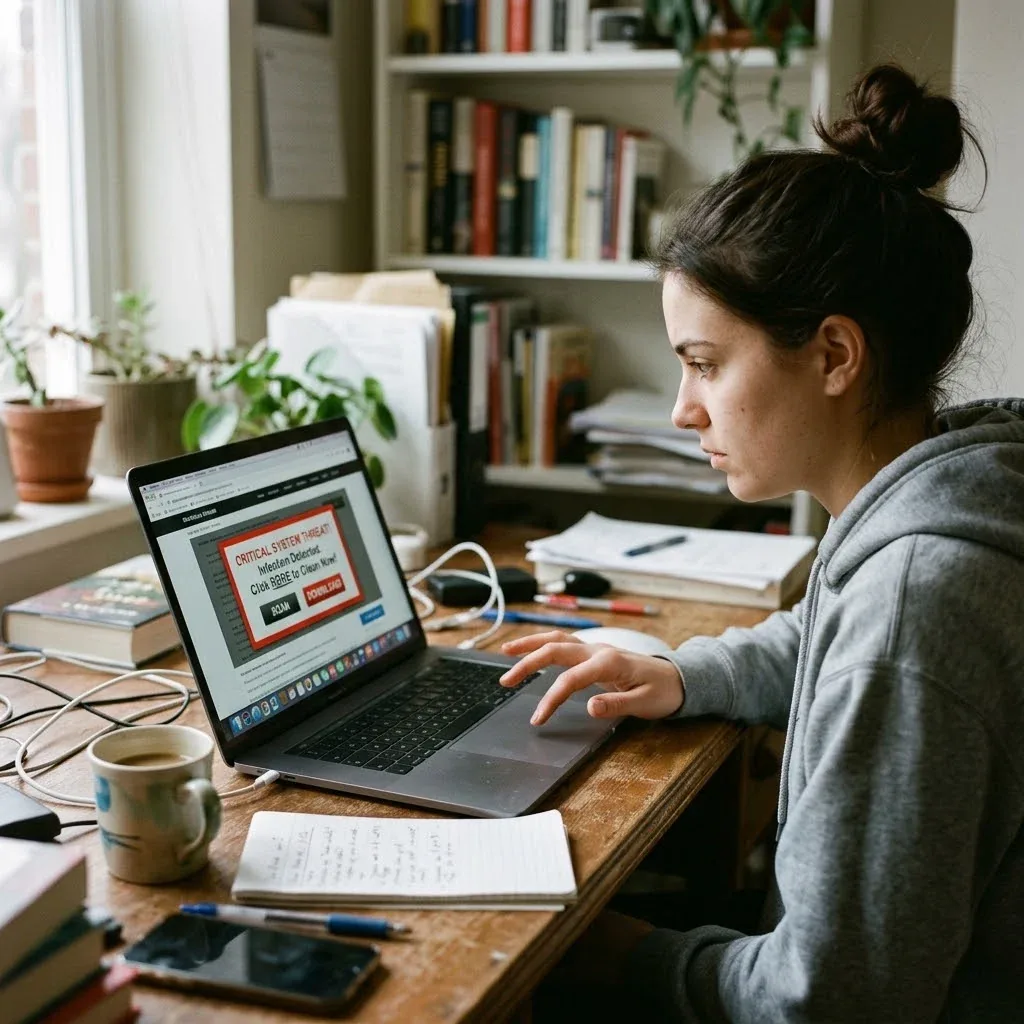
It started on a Tuesday. I was checking email and saw a message that looked like an invoice from a supplier. The sender address was close but not quite right, and the attachment was a document that asked me to enable editing. I clicked it because the deadline looked urgent. After that, the browser opened a page that asked for my bank login, and the laptop started showing pop-ups.
The email I almost opened
The next morning, I realized the email had asked me to open a file and then enter credentials on a page that looked like my bank. I almost typed in my password, but the URL was not the one I expected. The message also had a generic greeting, a misspelled word, and a sender address that did not match the company name.
I thought I was careful. I wasn't. One click on a 'safe' attachment and the laptop started doing things I didn't ask for.
What the scan found
I closed the suspicious tab and ran a full scan. The scan flagged adware and a browser extension that had been added without my permission. It also found a program that was changing search results and sending the browser to ad pages. Removing those items stopped the redirects, but the experience made me realize how easy it is for one attachment to turn into a bigger problem.
Warning signs I noticed
- Avoid: The email had a generic greeting and a sense of urgency.
- Avoid: The sender address looked similar but did not match the company.
- Avoid: The attachment asked me to enable editing or enter information.
- Do: After the scan, the redirect ads stopped and the browser behaved normally.
How I cleaned it up
What I did after the warning
- 1
Close the suspicious tab
Do not enter passwords, payment details, or personal information on a page you did not expect.
- 2
Report the email as phishing
Marking it as phishing helps your email provider block similar messages.
- 3
Run a full antivirus scan
A quick check is useful, but a full scan is better when the computer is already behaving strangely.
- 4
Remove anything flagged
Let the antivirus remove or quarantine threats, then restart the computer.
- 5
Update the browser and operating system
Updates can close the gaps that malicious downloads often use.
- 6
Keep real-time protection on
Real-time protection helps stop threats before they can install or spread.
After the cleanup, I did not just return to the old setup. I installed the antivirus plan mentioned below on the family laptop and kept it updated. I also moved away from opening unexpected attachments and started checking the sender address before opening files. The laptop has not shown the same fake warnings since, and that peace of mind is the part I did not expect to value so much.
What I use now
The plan I mention is a well-known antivirus option with real-time protection, malware removal, and a simple dashboard. I chose it because it is easy to keep updated and it helps stop threats before they can install or spread. If your computer has already been acting strange, run a full scan first, then keep protection on so the same problem is less likely to return.
Not sure if your devices are protected?
Real-time Antivirus Protection for Every Device
The plan mentioned in this story helps block phishing threats, remove malware, and keep your devices updated. See current pricing and features before you buy.
See the Antivirus PlansAdvertisement
Frequently Asked Questions
Can the antivirus remove existing malware?
The plan includes malware removal and real-time protection. If a device is already infected, run a full scan and remove threats before relying on real-time protection.
Is this story a review?
It is a reader-submitted story, not an independent lab test. Individual experiences can vary.
What should I do if I open a phishing attachment?
Close the tab, avoid entering personal or payment information, report the email as phishing, run a full scan, and update your browser and operating system.
What I checked
This story is based on a reader's account and edited for length and clarity.
- Antivirus planProduct page for the antivirus plan mentioned in this story.
- Reader experienceSubmitted by a reader and shared for informational purposes.
Advertisement